
Who We Are
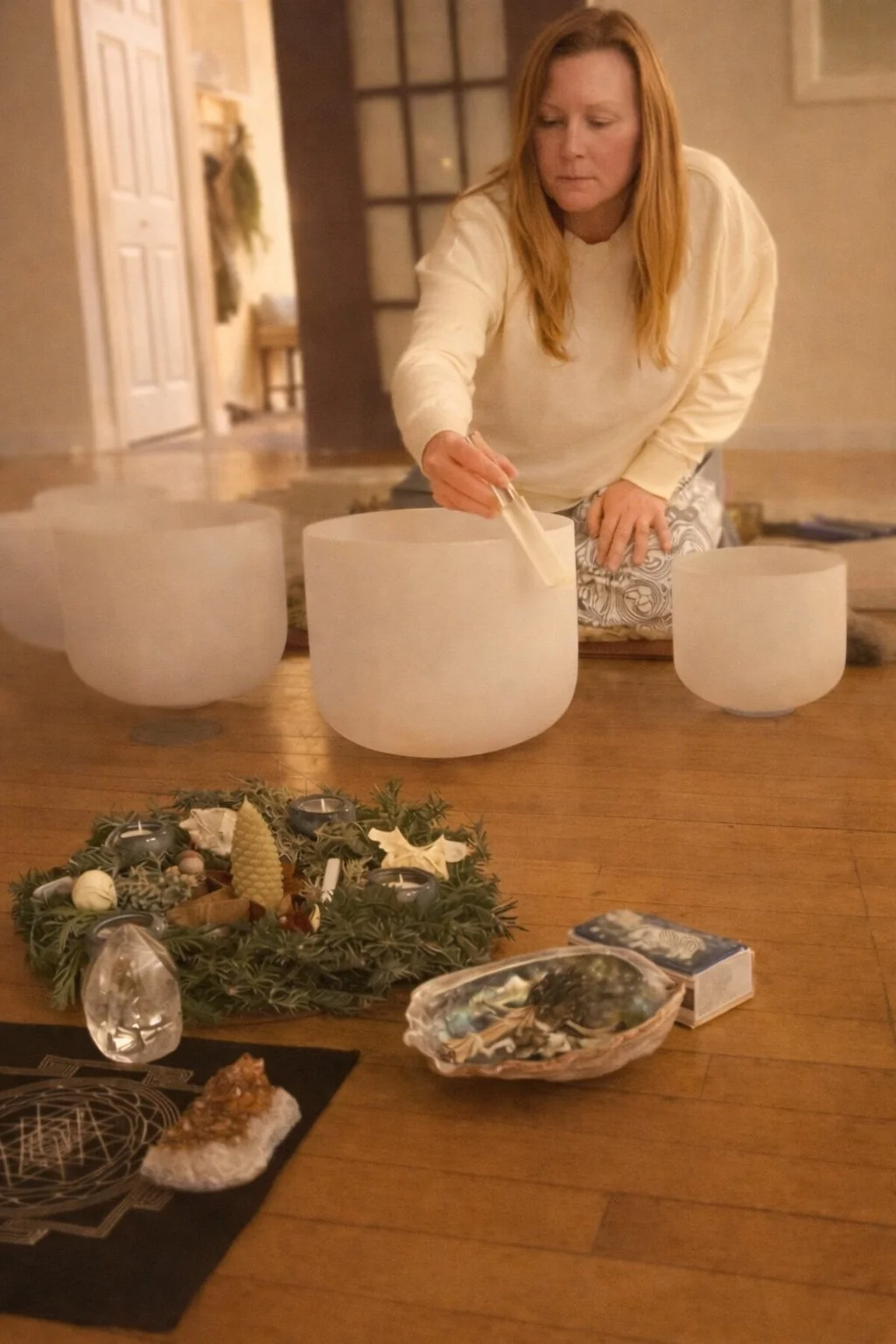
Leda Eggold is a certified Integral Sound Healing Practitioner whose work bridges education, healing, and the living intelligence of sound. Guided by a deep respect for the unfolding human being, she brings a holistic, relationship-centered approach to wellness that honors the interconnection of body, emotion, mind, soul, and spirit. Her work is also informed by a reverence for Indigenous wisdom traditions, particularly Native American understandings of the Four Elements—Earth, Water, Air, and Fire—as reflections of human experience and natural pathways toward balance.
Leda brings this reverence for the Four Elements to her work through understanding and respecting the wisdom that Earth relates to the body and our need for grounding and stability; Water reflects emotional life and our capacity for flow and connection; Air corresponds to breath, mind, and perception; and Fire represents vitality, intention, and transformation. When these elemental forces are in right relationship within a person, health and well-being naturally arise, not through force, but through awareness, rhythm, and deep listening.
With years of experience in Waldorf education and as a healing practitioner, Leda has developed a refined capacity to listen—to individuals, to rhythm, and to the subtle language of the nervous system. Through sound, she creates spaces of deep rest and regulation, supporting resilience, emotional balance, and inner coherence without force or urgency. Her approach reflects both anthroposophical insights and Indigenous elemental wisdom, recognizing that healing arises through right relationship—with the body, the natural world, and one’s inner life.
Leda works with clients one to one to create deeply personalized healing journeys. Each session is guided by individualized sound healing protocols developed through careful listening, intention setting, and attunement to the client’s physical, emotional, and energetic needs. Through therapeutic sound and vibration, she supports nervous system balance, emotional processing, and energetic alignment, while empowering clients with sound-based self-care practices that can be integrated into daily life. Her work honors the whole human being, inviting lasting equanimity, deep presence, and a renewed sense of harmony.
Who Is Pachamama
My life’s work mirrors the way of Pachamama through a devotion to humility, listening, and reciprocal care. As a former Waldorf educator and certified Integral Sound Healing practitioner, I hold space for others to remember their innate connection to the living world—within their bodies, their nervous systems, and the Earth itself. Just as Pachamama nourishes through vibration, rhythm, and cyclical balance, my work centers on restoring harmony through sound, presence, and reverent attention to what is unseen yet deeply felt. I am guided by the understanding that healing arises not through force, but through attunement—by honoring natural rhythms, offering gratitude, and meeting each person as a whole being within an interconnected web of life. In this way, my purpose is an act of service: to help others return to relationship with themselves, one another, and the sacred ground that holds us all.
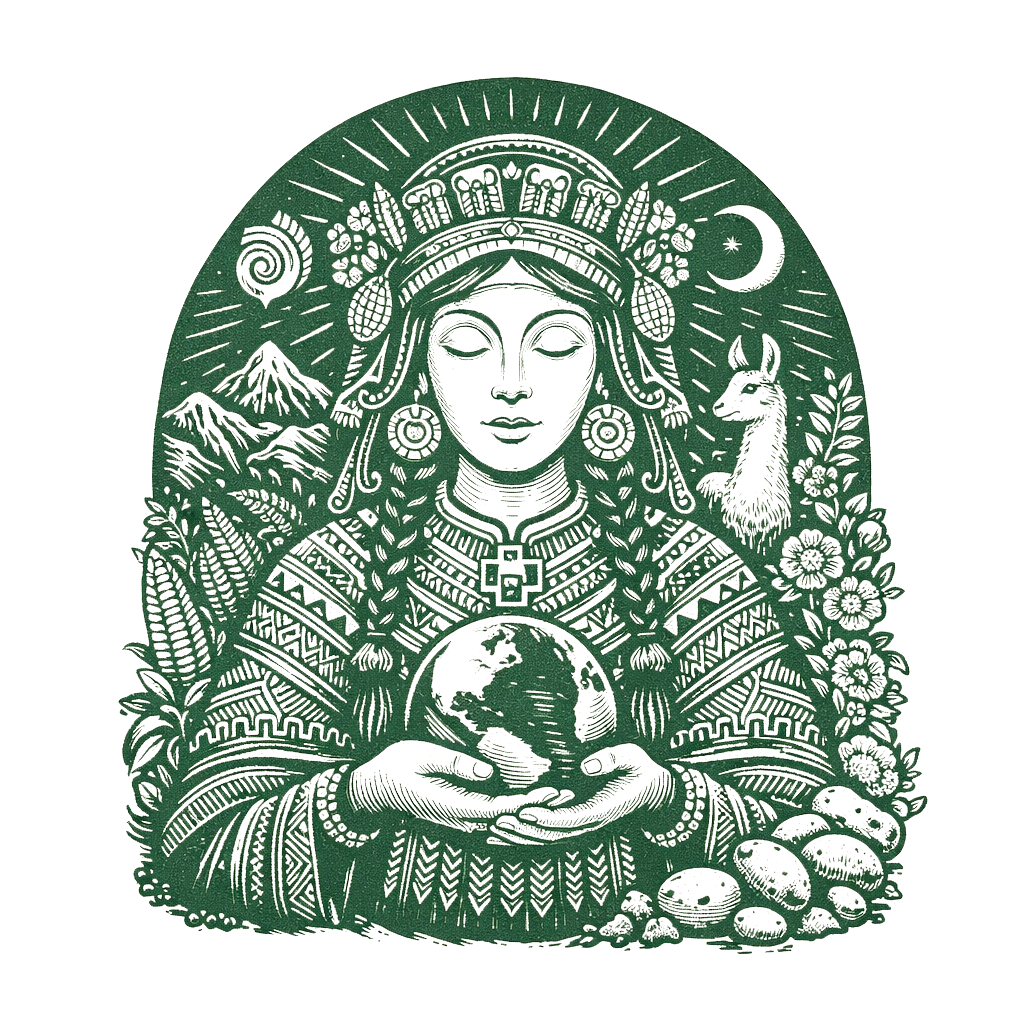
Pachamama holds deep historical and cultural significance as a living embodiment of Earth as a sacred, sentient being, offering a worldview rooted in humility, gratitude, and reciprocal relationship—especially within Indigenous Andean communities.
Pachamama originates in the cosmologies of the Quechua, Aymara, and other Indigenous peoples of the Andes, long before European colonization. Rather than being seen as a distant deity, Pachamama is understood as immanent—present in the soil, mountains, waters, and cycles of life. She governs agriculture, fertility, seasons, and the balance between human activity and the natural world.
In traditional Andean societies, survival depended on attunement to ecological rhythms. Honoring Pachamama ensured harmony with these rhythms, reinforcing practices of careful stewardship, communal responsibility, and restraint. Ritual offerings were made to thank her for sustenance and to ask forgiveness for any imbalance caused by human actions.
At the heart of Pachamama’s significance is the cultivation of humility. Humans are not viewed as owners of the land but as participants within a living system. This perspective fosters an ethic of listening rather than dominating, receiving rather than extracting.
Gratitude is expressed not as abstraction but as daily practice—through offerings of food, drink, coca leaves, flowers, and prayer. These acts remind the community that nourishment, health, and abundance arise from relationship, not entitlement. Gratitude toward Pachamama also reinforces patience, reverence, and awareness of interdependence.
Pachamama teachings shape a collective identity grounded in ayni (sacred reciprocity). What is taken must be given back; what is received must be honored. This principle extends beyond nature to human relationships, strengthening community bonds and social harmony.
Pachamama stands as a powerful symbol of ecological consciousness and ancestral wisdom. For Indigenous communities, honoring Pachamama continues to affirm cultural identity and spiritual continuity. More broadly, her teachings offer the modern world a reminder that healing—personal, communal, and planetary—begins with humble awareness, gratitude, and respect for the living Earth.
Pachamama is not simply Earth as resource, but Earth as Mother, teacher, and relation—inviting humanity to remember its place within the great web of life.
Contact us
If you feel called to explore sound healing or have questions about sessions, offerings, or collaborations, I’d love to hear from you. Use the form below to get in touch.